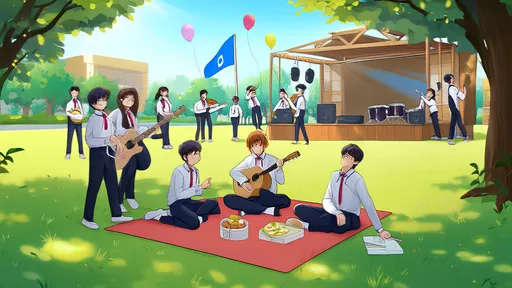
The campus quadrangle buzzed with anticipation as students unfolded picnic blankets and tuned guitars beneath the late afternoon sun. What began as an experimental "pop-up" concert series last fall has blossomed into a full-fledged tradition: the University Spring Lawn Music Festival. Unlike the rigid structure of auditorium performances, this grassroots event thrives on spontaneity, with the scent of freshly cut grass mingling with folk ballads and indie rock reverberations.
A Living Mosaic of Sound and Community
At its core, the festival embodies the organic collision of academia and artistry. Physics majors harmonize with theater students in makeshift choirs, while a jazz studies professor might casually join a student combo's rendition of "Autumn Leaves." The lack of a raised stage creates an egalitarian atmosphere - performers sit cross-legged on the grass, making eye contact with audience members who often become impromptu backup singers by the second chorus.
The programming defies conventional genre boundaries. One hour might feature a classical string quartet performing Vivaldi's "Spring," followed immediately by an a cappella group's haunting cover of a Radiohead deep cut. This deliberate sonic diversity reflects the festival's founding principle: music as the universal dialect of campus life. "We're not here to showcase perfection," explains junior organizer Maya Chen, wiping guitar picks on her jeans. "We're celebrating how music breathes when it's freed from recital halls and streaming algorithms."
Logistics Meet Liberation
Behind the carefree ambiance lies meticulous planning. The grounds crew works overtime to reinforce high-traffic grass areas, while audio engineering students test battery-powered PA systems that won't trip circuit breakers. Food trucks cluster along the perimeter, their generators humming in sync with bass lines. A team of "sunset spotters" monitors weather patterns to adjust performance times around golden hour - that magical twilight when voices seem to carry farther and guitar strings glow like molten copper.
What surprises many first-time attendees is the festival's democratic booking process. Rather than relying on talent show auditions or faculty selections, the lineup emerges from a campus-wide "musical potluck" sign-up sheet. This approach has uncovered remarkable hidden talents: a neuroscience PhD candidate who performs original sea shanties, a cafeteria worker with a spine-tingling operatic tenor, and even the university president's surprisingly competent ukulele skills.
The Ripple Effects
Four years since its inception, the festival's influence permeates campus culture. Music department applications have increased 22%, while unrelated majors report higher retention rates among participants. Psychology researchers are studying the phenomenon they've dubbed "the lawn effect" - improved stress biomarkers in students who attend just 30 minutes of performances. Local businesses have taken notice too, with music stores offering festival discounts and coffee shops hosting spin-off acoustic nights.
As dusk settles on the final evening, hundreds of phone flashlights sway like fireflies during the traditional all-play finale. The crowd's collective voice rises through the oak trees, singing a beloved campus folk song older than most buildings. In this moment, the festival achieves its unspoken goal: transforming a patch of grass into the university's beating heart, proving that sometimes the most powerful education happens between scheduled classes and without letter grades.
By /Aug 13, 2025

By /Aug 13, 2025

By /Aug 13, 2025
By /Aug 13, 2025

By /Aug 13, 2025

By /Aug 13, 2025
By /Aug 13, 2025

By /Aug 13, 2025
By /Aug 13, 2025

By /Aug 13, 2025
By /Aug 13, 2025
By /Aug 13, 2025

By /Aug 13, 2025

By /Aug 13, 2025

By /Aug 13, 2025

By /Aug 13, 2025

By /Aug 13, 2025
By /Aug 13, 2025

By /Aug 13, 2025

By /Aug 13, 2025
