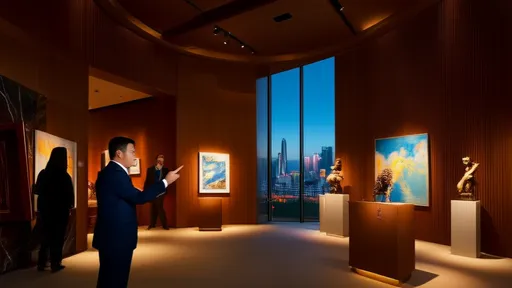
In a striking testament to the evolving dynamics of the global art market, a significant portion of the works presented in Phillips' recent Hong Kong evening sales were making their debut on the auction block. According to the auction house's Hong Kong Auction Director, nearly two-thirds of the pieces offered had never before been subjected to the public spectacle and financial scrutiny of a major sale. This phenomenon signals a profound shift in collector behavior, market confidence, and the very nature of the assets that are now deemed worthy of top-tier auction events.
The traditional model of evening sales, particularly in established markets like Hong Kong, has often relied on a core of well-known, "blue-chip" artists whose works have a proven track record of performance at auction. These are the familiar names—the Warhols, the Basquiats, the Zao Wou-Kis—whose pieces circulate from one collection to another, their values benchmarked and reinforced with each successive sale. The appearance of such works provides a sense of stability and predictability. However, the current trend, as highlighted by Phillips, suggests a departure from this comfort zone. The market is demonstrating a robust appetite for freshness, for works that have been held privately for generations or have emerged directly from artists' studios, carrying no auction history whatsoever.
This influx of fresh-to-market material is not occurring in a vacuum. It is, in many ways, a direct reflection of the burgeoning confidence among a new generation of collectors, particularly those from across Asia. These collectors are increasingly sophisticated, well-researched, and driven by a desire to build distinctive collections rather than simply acquire trophy names. They are less intimidated by the absence of a price history and more motivated by connoisseurship, personal passion, and the potential for discovery. For them, the opportunity to acquire a major work that has been unseen for decades, or a pivotal piece by a rising contemporary star before it enters the established canon, holds immense appeal. This confidence allows auction houses like Phillips to curate sales that are bolder and more curatorially driven.
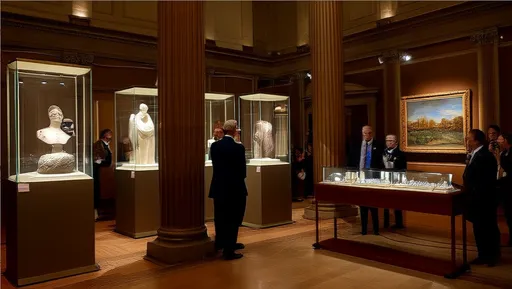
Furthermore, the role of the auction house itself has transformed. No longer mere facilitators of transactions, leading auctioneers now act as tastemakers and market makers. The decision to feature a work with no auction pedigree is a powerful statement. It requires the house to leverage its expertise, its network, and its reputation to build a compelling narrative around the artwork. This involves intensive scholarly research to establish provenance and importance, strategic marketing to generate excitement, and carefully calibrated estimates that acknowledge the work's quality while enticing competitive bidding. The success of these "debut" pieces, therefore, becomes a barometer of the auction house's influence and the trust it commands among its clientele.
The categories experiencing this trend are notably diverse. While one might expect this phenomenon to be concentrated in the red-hot contemporary sector, it is equally evident in more traditional fields like modern and impressionist art. Long-held family collections across Europe and North America are being dispersed, bringing masterpieces that have been off the public radar for half a century to the market. Simultaneously, there is a growing appreciation for niche areas and overlooked artists, whose best works are often appearing at auction for the first time as scholarship and collector interest converge. This democratization of value is creating a more dynamic and less hierarchical market landscape.
Of course, this shift towards fresh material is not without its risks. For consignors, the gamble lies in the uncertainty of the outcome. A work with a strong auction history provides a safety net—a clear sense of its market value. A debut piece, however, is an unknown quantity. Its final hammer price can be a spectacular triumph that sets a new benchmark or a disappointing result that fails to meet expectations. For buyers, the risk involves authentication, condition, and the long-term sustainability of the value they are establishing. They are, in essence, participating in the primary market valuation of a secondary market object.
Yet, the fact that nearly two-thirds of a major evening sale can consist of such works indicates that the market is currently weighting the potential rewards far more heavily than the risks. The thrill of discovery, the prestige of owning a "first," and the potential for significant financial upside are powerful motivators. This environment encourages consignors to part with treasures they may have been hesitant to sell in a more conservative market climate, creating a virtuous cycle of supply and demand.
Looking ahead, this trend is likely to have lasting implications. It suggests a maturation of the Asian auction market, moving beyond its role as a secondary hub for Western art to a primary center for defining value on its own terms. It also points to a more globalized and interconnected art world, where masterpieces from a Swiss castle can find a new home in Shanghai, and a young artist from Seoul can achieve a record price in Hong Kong on the strength of a debut presentation. The auction calendar is becoming less predictable and more exciting, each sale offering the genuine possibility of market-defining moments.
In conclusion, the observation from Phillips' Hong Kong director is more than a simple statistic; it is a snapshot of a market in transition. The dominance of fresh-to-market works in its evening sales underscores a collective boldness among collectors, a strategic pivot by the auction house, and a deepening sophistication in the appreciation of art across the region. This movement away from the safety of known quantities towards the excitement of the new is reshaping the landscape of art collecting, making each major sale not just a financial event, but a cultural one, rich with the promise of discovery and the establishment of new artistic legacies.

By /Sep 25, 2025

By /Sep 25, 2025
By /Sep 25, 2025
By /Sep 25, 2025
By /Sep 25, 2025

By /Sep 25, 2025

By /Sep 25, 2025
By /Sep 25, 2025

By /Sep 25, 2025
By /Sep 25, 2025

By /Sep 25, 2025

By /Sep 25, 2025

By /Sep 25, 2025
By /Sep 25, 2025
By /Sep 25, 2025

By /Sep 25, 2025
By /Sep 25, 2025

By /Sep 25, 2025
By /Sep 25, 2025

By /Sep 25, 2025
