The city of Hangzhou, long celebrated as the cradle of Chinese silk culture, is once again at the epicenter of a textile revolution, this time woven with the threads of global contemporary art. The highly anticipated Hangzhou Triennial of Fiber Art has unfurled, presenting a sprawling tapestry of creativity crafted by 45 artists from across the world. This edition, more than any before it, transcends the traditional boundaries of its medium, positioning fiber not merely as a material but as a profound language for exploring cultural identity, technological interplay, and the very fabric of human connection in a fragmented world.
The thematic core of the triennial acts as a powerful loom upon which diverse artistic visions are interlaced. It moves beyond a simple survey of techniques like weaving, knitting, or embroidery, challenging both artists and visitors to reconsider the fundamental associations of thread and cloth. Here, fiber becomes a metaphor for memory, a carrier of political statement, a conduit for digital data, and a fragile yet resilient symbol of ecological and social systems. The curatorial vision is deliberately expansive, creating a dialogue where ancient craft traditions converse with cutting-edge digital media, and intimate handiwork stands in stark contrast to monumental installations.
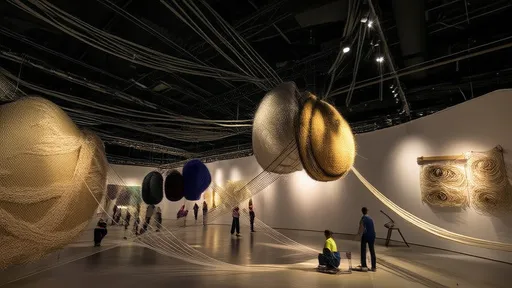
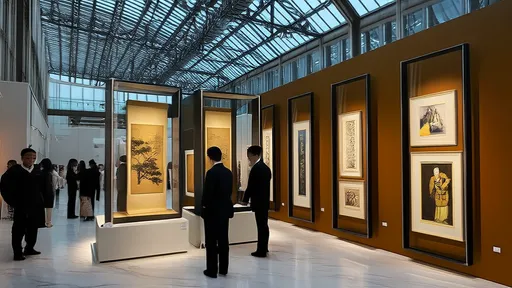
Walking through the exhibition halls, one is immediately struck by the sheer scale and ambition of the works on display. A standout piece is a colossal, suspended netting by a renowned South American artist, which cascades from the ceiling like a petrified waterfall of intricate knots. Visitors are encouraged to walk beneath it, their movements causing subtle shifts in the structure, making them active participants in the artwork's ever-changing form. This piece powerfully embodies the triennial's theme, illustrating how individual threads, though fragile alone, create immense strength and complexity when interconnected—a direct commentary on our globalized society.
From Northern Europe comes a deeply contemplative installation that utilizes bio-plastics and light-reactive threads. The artist has created a series of large, translucent panels that slowly change hue as natural light passes through them during the day. This work quietly speaks to themes of sustainability and the ephemeral nature of our environment, its beauty lying in its delicate, transient state. It is a silent poem written in light and biodegradable material, urging a meditation on consumption and the legacy we leave on the planet.
An artist collective from Southeast Asia presents a vibrant and politically charged work that incorporates traditional batik patterns with augmented reality. Viewers use tablets to scan sections of the large fabric panels, unlocking animated sequences and oral histories narrated by local artisans. This ingenious fusion not only preserves endangered cultural knowledge but also critiques the commodification of indigenous art, creating a dynamic, multi-layered experience that bridges generations and technological divides.
The participation of artists from Africa brings a powerful narrative of reclamation and identity. One particularly moving work is composed of thousands of repurposed plastic bags, meticulously crocheted into a form reminiscent of a traditional ceremonial garment. The artist uses this paradoxical material—a symbol of both modern consumerism and environmental blight—to create an object of cultural pride and beauty. The piece is a stark, beautiful contradiction, highlighting resilience and the ability to transform waste into worth, despair into dignity.
North American contributors explore the intersection of fiber and technology with remarkable ingenuity. One installation features a room filled with looms connected to algorithms that translate real-time global internet traffic patterns into complex woven patterns. The constant, silent clatter of the looms produces a visual map of digital communication, making the invisible flow of data tangible. It is a breathtaking synthesis of the ancient and the ultra-modern, questioning what we consider to be the "fabric" of our contemporary existence.
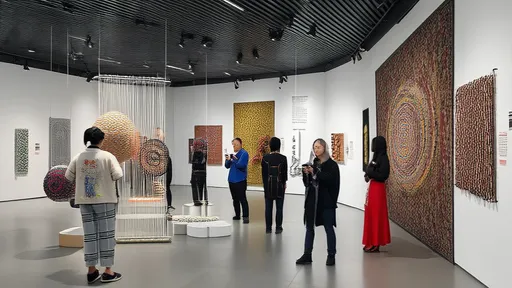
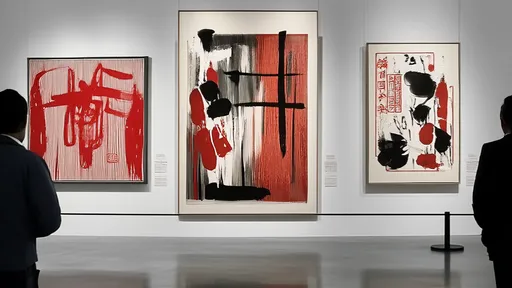
Chinese artists, drawing from a deep well of heritage, offer perspectives that are both introspective and globally aware. A series of works using raw, un-dyed silk and hemp explores the philosophical concepts of wabi-sabi—the acceptance of imperfection and transience. Another artist deconstructs iconic blue-and-white porcelain patterns, painstakingly recreating their cracks and fissures with blue thread on vast white canvases, thus weaving a narrative of cultural memory, fracture, and repair.
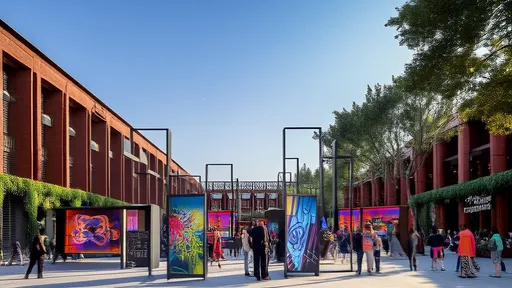
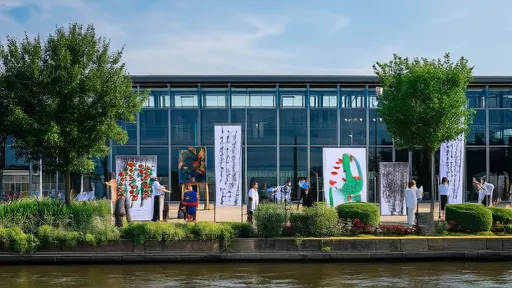
The triennial's impact is magnified by its location. Hangzhou, with its legendary West Lake and history as a key hub on the Silk Road, provides a resonant backdrop. The city itself is part of the exhibition, with several site-specific installations placed in historical buildings and public spaces, creating a dialogue between the contemporary artworks and the city's rich textile past. This contextual layering adds immense depth, allowing the art to converse with history, place, and memory.
Beyond the visual spectacle, the event is fortified by a robust program of symposiums, workshops, and live performances. These ancillary events are not mere additions but integral components that animate the triennial's themes. Master weavers demonstrate techniques passed down through generations alongside programmers showing how to code a digital jacquard loom. These encounters break down barriers between artist, artisan, and audience, fostering a living, breathing community of practice.
In essence, the Hangzhou Triennial of Fiber Art is far more than an art exhibition; it is a vital cultural statement. By bringing together 45 distinct artistic voices, it successfully weaves a pluralistic picture of our current moment. It demonstrates that in an age of digital saturation and political division, the tactile, slow, and inherently connective nature of fiber art offers a unique and necessary perspective. The threads on display—whether of silk, plastic, light, or data—are tied together by a shared human impulse to create, to communicate, and to find meaning in the intricate webs we weave. The triennial does not provide easy answers, but it masterfully frames the questions, leaving visitors with a profound sense of being part of a larger, interconnected tapestry.
By /Sep 25, 2025
By /Sep 25, 2025
By /Sep 25, 2025
By /Sep 25, 2025
By /Sep 25, 2025
By /Sep 25, 2025
By /Sep 25, 2025
By /Sep 25, 2025
By /Sep 25, 2025
By /Sep 25, 2025
By /Sep 25, 2025
By /Sep 25, 2025
By /Sep 25, 2025
By /Sep 25, 2025
By /Sep 25, 2025
By /Sep 25, 2025
By /Sep 25, 2025
By /Sep 25, 2025
By /Sep 25, 2025
By /Sep 25, 2025
