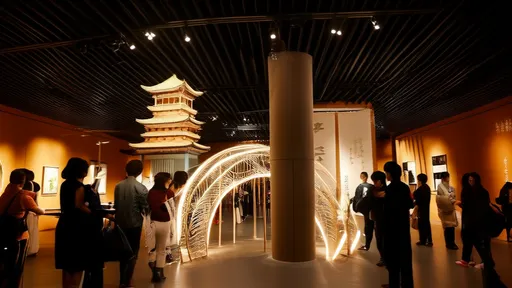
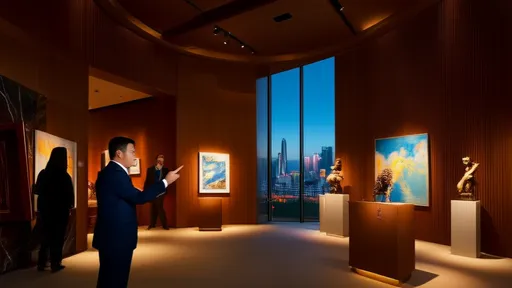
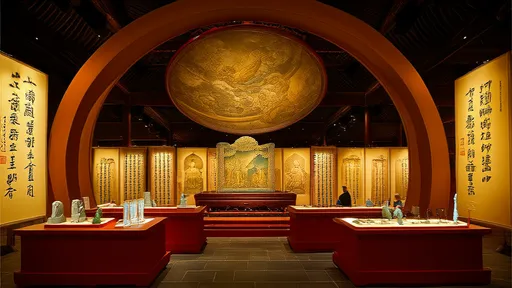
The desert winds of Dunhuang, long a crucible of cultural confluence along the ancient Silk Road, are whispering tales of a new renaissance. Within the hallowed halls hosting the Dunhuang Cultural Expo's signature shu hua zhan, calligraphy and painting exhibition, over a hundred masterworks are not merely displayed; they are engaged in a silent, profound dialogue. This is more than an art show; it is a vibrant testament to the enduring power of cultural exchange and the beautiful, complex process of fusion that occurs when diverse artistic traditions meet on a neutral, yet historically charged, ground.
The very air in the exhibition space feels thick with history. Dunhuang itself, with its legendary Mogao Caves serving as a millennium-old library of Buddhist art, is the perfect protagonist for this narrative. The exhibition cleverly uses this backdrop not as a relic to be worshipped, but as a springboard for contemporary creation. The featured artists, hailing from across China and beyond, have not come to simply imitate the past. Instead, they have absorbed the spirit of Dunhuang—its bold colors, its flowing lines, its synthesis of Indian, Central Asian, and Chinese motifs—and filtered it through their unique modern sensibilities. The result is a breathtaking collection where the echo of a Tang dynasty celestial maiden might be found in the brushstroke of a 21st-century abstract painter.
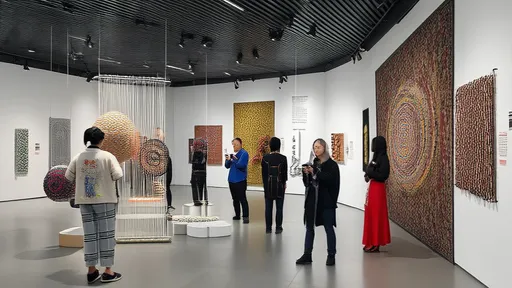
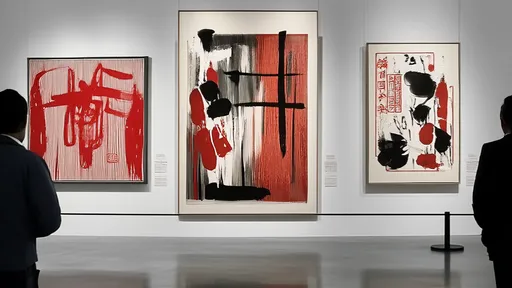
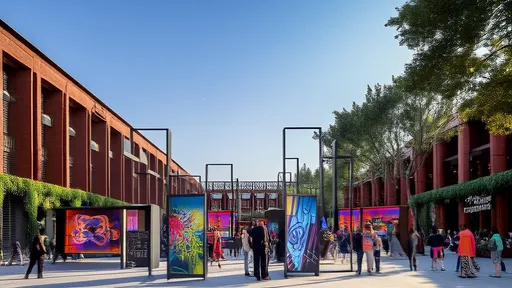
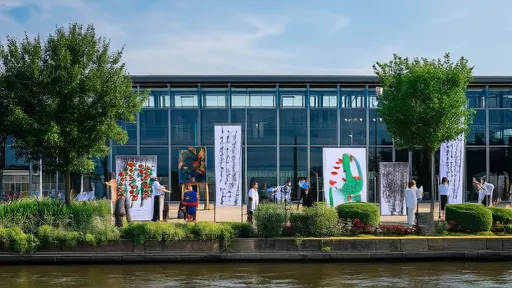
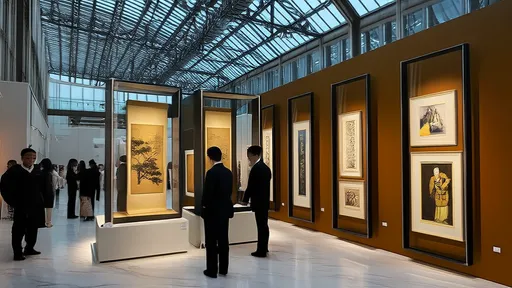
One cannot help but be struck by the sheer diversity of the hundred-plus pieces on display. There are monumental landscapes that pay homage to the vast, unforgiving beauty of the Gobi Desert, rendered with an intensity that rivals the old masters yet carries a distinctly contemporary emotional weight. Alongside these are delicate, intricate calligraphic works where ancient poetry is reborn, the characters dancing on the paper with a rhythm that speaks to both discipline and liberation. What binds these disparate works together is a common thread of mutual learning. A traditional Chinese ink wash painting might subtly incorporate the perspective techniques of Western realism, while a piece that at first glance appears thoroughly modern reveals, upon closer inspection, the symbolic language and palette deeply rooted in Dunhuang's mural traditions.
The theme of civilizational mutual appreciation and integration is not a mere slogan here; it is the very engine of the exhibition's creativity. We see a stunning series of portraits of the Bodhisattvas from the Mogao Caves. But these are not straightforward reproductions. One artist has reimagined them using the color field theory of Mark Rothko, bathing the serene figures in vast, emotive planes of color that evoke both spiritual tranquility and modern existential questioning. Another presents a calligraphic scroll where classical Chinese texts are interwoven with phrases from Persian poetry, the scripts flowing into one another, creating a visual metaphor for the inseparable blend of cultures that defined the Silk Road. This is integration at its most profound—not a shallow pastiche, but a deep, thoughtful synthesis that creates something entirely new and resonant.
Perhaps the most powerful aspect of the exhibition is its demonstration of how artistic language itself becomes a vehicle for integration. The fundamental tools—the brush, the ink, the xuan paper—remain, but their grammar is expanded. An artist from Xinjiang incorporates the vibrant, geometric patterns of Uyghur textiles into a landscape composition, creating a work that is unmistakably Chinese in medium yet richly Central Asian in its visual rhythm. A European artist, deeply influenced by a residency in Dunhuang, presents a series where the iconic flying apsaras are depicted with a kinetic energy reminiscent of Italian Futurism, their scarves becoming streaks of light and motion. These works do not ask which culture is dominant; they celebrate the new vocabulary that emerges from their meeting.
The exhibition serves as a crucial reminder in our often fragmented world. In an era where differences are frequently highlighted as divisions, the Dunhuang shu hua zhan, calligraphy and painting exhibition offers a different model. It proves that civilizations do not merely tolerate each other; they can engage, interact, and ultimately enrich one another to produce works of stunning beauty and intellectual depth. The dialogue happening on these walls is a continuation of the one that occurred in Dunhuang's caves over a thousand years ago—a conversation that shaped history. This modern chapter argues convincingly that such conversations are not only still relevant but are essential for a vibrant and harmonious global culture.
Leaving the exhibition, the visitor carries with them more than just memories of individual artworks. They carry the impression of a living, breathing cultural ecosystem. The hundred-plus masterpieces collectively assert that the future of art, and perhaps of human understanding itself, lies not in isolation but in the courageous and open-hearted pursuit of exchange. The sands of Dunhuang have preserved the artifacts of past integrations; this exhibition ensures that the spirit of that integration is very much alive, constantly being reimagined and repainted for a new generation.
By /Sep 25, 2025
By /Sep 25, 2025
By /Sep 25, 2025
By /Sep 25, 2025
By /Sep 25, 2025
By /Sep 25, 2025
By /Sep 25, 2025
By /Sep 25, 2025
By /Sep 25, 2025
By /Sep 25, 2025
By /Sep 25, 2025
By /Sep 25, 2025
By /Sep 25, 2025
By /Sep 25, 2025
By /Sep 25, 2025
By /Sep 25, 2025
By /Sep 25, 2025
By /Sep 25, 2025
By /Sep 25, 2025
By /Sep 25, 2025
